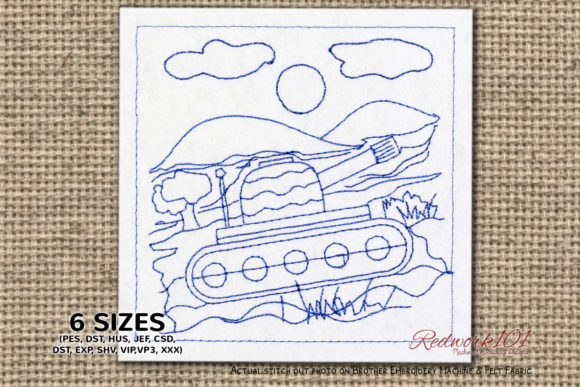
Reviewing the Military Tank Treading Design for Merch
As an embroidery designer who has spent years digitizing and testing files for small business clients, I approach every new machine embroidery design with a critical eye. It is not just about whether the image looks good on a screen; it is about how that design translates into thread on fabric. Today, I am reviewing the Military Tank Treading on Rough Terrain file to determine its viability for branded merchandise, patches, and custom apparel.
The initial impression of this design is bold and rugged. The subject matter—a tank navigating difficult ground—immediately conveys strength, durability, and resilience. For businesses in the Military sector, veteran support groups, or outdoor adventure brands, this visual language is powerful. However, for a boutique café or a delicate handmade product line, the aesthetic might feel too aggressive unless used ironically or as part of a specific thematic collection. The design feels professional and sturdy, leaning heavily into a classic, utilitarian style rather than something playful or elegant.
Evaluating Visual Impact and Brand Identity
When we talk about brand identity, consistency is key. This design serves a specific niche. If you are running a shop that sells tactical gear, history books, or heavy-duty workwear, this embroidery file aligns perfectly with your customer’s expectations. It builds trust by showing that your brand understands the culture of strength and perseverance.
However, the description notes that "The Box Stitch shown in the picture is optional." This is a crucial detail for a designer. An optional border can make or break the versatility of a design. If the box stitch is included, it frames the tank, making it ideal for square or rectangular embroidered patch applications. If removed, the tank stands alone, which might be better for curved surfaces like cap fronts or sleeve accents. The note that "the color of the outer box is a different color in most of the designs" suggests that digitizers have considered contrast. This is vital for visibility. A dark tank on a dark navy uniform will vanish without a contrasting border or highlight stitching.
Real-World Applications for Small Business Merch
Let us look at where this design performs best in a commercial setting. For small business merch, versatility is currency. Here is how I see this design working across different products:
- Embroidered Patches: This is the strongest use case. The rough terrain element provides texture that looks fantastic in satin and fill stitches. Patches can be sold individually or attached to jackets, bags, and hats.
- Cap Embroidery: Placing this on the front panel of a baseball cap requires careful sizing. The width of the tank must fit within the standard 4-inch to 5-inch usable space of a cap hoop. If the design is too wide, it will distort on the curved surface.
- Tote Bag Design: Canvas tote bags have a tight weave that handles dense stitching well. A large version of this tank could serve as a central graphic for a bookstore or museum gift shop selling military history items.
- Apron Embroidery: For BBQ shops or butcher stores that want a rugged, industrial vibe, placing this on the chest pocket of a heavy canvas apron adds a unique touch of personality.
- Custom Apparel: Work shirts and polos benefit from smaller, left-chest placements. Ensure the details of the treads do not become a blob of thread when scaled down.
Technical Considerations and Production Notes
Before you load this digital embroidery file into your machine, there are technical factors to address. The phrase "treading on rough terrain" implies complex detailing. In embroidery, complex backgrounds can lead to high stitch density. High density increases production time and the risk of fabric puckering.
I recommend testing this design on a scrap piece of the exact fabric you intend to use. If you are embroidering on a lightweight cotton tee, you must use a cut-away stabilizer to prevent the weight of the thread from pulling the fabric out of shape. For heavier materials like denim or canvas, a tear-away stabilizer might suffice, but always test first.
Another critical point is the hoop size. The description does not specify the exact dimensions or stitch count. You must check these details before purchase. If the design is optimized for a 5x7 hoop but you only have a 4x4 hoop, you will need to resize it. Resizing an embroidery design by more than 10% can distort the stitch angles and cause thread breaks. Always try to buy the correct size for your hoop rather than resizing significantly.
Color Contrast and Thread Selection
The success of this design relies heavily on thread colors. Military themes often use olive drab, tan, black, and grey. However, if you are stitching this on a dark garment, you need high contrast. Consider using a metallic gold or bright orange for the optional box stitch to make the design pop. If the box stitch is omitted, ensure the tank itself has enough light and shadow variation to stand out against the background fabric.
For a handmade product line, consider offering customization. Let clients choose the track color or the background terrain color. This personalization increases the perceived value of the finished product and encourages buyer engagement.
Where to Use Caution
While this design is strong, it is not universal. Avoid using it on items that require frequent, harsh washing unless you secure the threads properly, as detailed fill stitches can loosen over time. Also, be cautious with tiny lettering if you plan to add text around the tank. The intricate details of the tank treads should not compete with small fonts. Keep any accompanying text bold and simple.
Additionally, consider the fabric texture. Highly textured fabrics like fleece or terry cloth can swallow fine details. On these materials, simplify the design by removing the smallest satin stitches in the terrain details, focusing instead on the main shape of the tank.
Final Verdict for Commercial Use
The Military Tank Treading on Rough Terrain is a solid asset for designers targeting a rugged, historical, or tactical market. It offers a professional look that enhances commercial embroidery projects when applied correctly. To maximize its potential:
- Create a printable mockup to show clients how it looks on different colored garments.
- Confirm commercial licensing rights before selling items made with this design asset.
- Test the optional box stitch both on and off to see which version offers better structural integrity for patches.
- Check the stitch count to estimate production costs accurately.
By treating this file as a functional component of your brand’s visual toolkit, rather than just a decorative image, you can create high-value merchandise that resonates with your audience. Whether it is for a veteran’s reunion shirt or a rugged outdoor brand’s logo accent, this design holds up under scrutiny when paired with smart production choices.