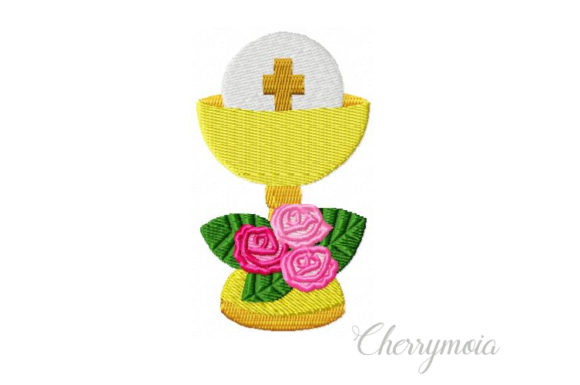
Reviewing the Communion Cup Design for Business Merch
As an embroidery designer who has spent years digitizing and testing patterns for small businesses, I approach every new machine embroidery design with a critical eye. It is not just about whether a motif looks pretty on a screen; it is about how it performs in the real world of commercial production. Recently, I evaluated the Communion Cup design, a piece categorized under Baptism themes but possessing a versatility that extends far beyond religious events. For boutique owners, Etsy sellers, and apparel decorators, understanding the practical application of such a design is crucial for creating high-value small business merch.
First Impressions: Visual Personality and Brand Fit
The product description highlights that this cute embroidery is fun and easy to stitch. From a design perspective, "fun and easy" often translates to clean lines, manageable stitch counts, and a lack of overly complex shading that can muddy the final result. The Communion Cup exudes a friendly, handmade charm rather than a rigid, corporate stiffness. This visual personality is vital for brands that want to project warmth, tradition, or artisanal quality.
For a bakery, a florist, or a local café, this aesthetic aligns perfectly with a brand identity that values community and care. The design feels decorative yet grounded. It does not scream for attention with aggressive boldness but invites closer inspection with its elegant simplicity. When considering this for custom apparel or branded goods, it serves as a subtle nod to craftsmanship. It suggests that the business behind the product pays attention to detail, which is a powerful driver of customer trust.
Real-World Applications for Small Businesses
The true test of any digital embroidery file is its adaptability across various substrates. The Communion Cup comes with multiple embroidery file formats, which is a significant advantage for shops using different machine brands. Here is how I envision this design performing in a commercial setting:
- Embroidered Patches: This is perhaps the strongest use case. A patch allows for maximum control over the backing and stabilizer. The design’s likely moderate complexity makes it ideal for iron-on or sew-on patches that can be added to denim jackets, canvas bags, or employee uniforms. It acts as a collectible item for customers, enhancing the perceived value of the finished product.
- Apron Embroidery: For bakeries, florists, or craft studios, staff aprons are walking billboards. Placing the Communion Cup on the chest pocket area creates a professional yet approachable look. The design’s theme of communion or sharing pairs beautifully with hospitality industries where service and connection are paramount.
- Tote Bag Design: Canvas tote bags are a staple for eco-conscious brands. The design can serve as a central focal point or a corner accent. Because the description notes it is easy to stitch, it should hold up well on heavier fabrics without causing excessive puckering, provided the correct stabilizer is used.
- Cap Embroidery: Using this on the front panel of a dad hat or structured cap requires careful scaling. The curved surface of a cap can distort intricate details. However, if the design relies on strong outlines rather than fine fill stitches, it can work effectively as a sleeve detail or a small front logo, adding a touch of whimsy to headwear.
Navigating Technical Challenges and Fabric Textures
While the Communion Cup is described as easy to stitch, no design is immune to the physics of thread and fabric. As a designer, I always advise testing on the actual material before running a full production batch. Here are specific areas where caution is needed:
Fabric Texture and Density: If you are stitching on textured towels or rough canvas, the finer details of the cup might get lost. In such cases, increasing the thread colors contrast or slightly enlarging the hoop size relative to the design can help maintain clarity. Conversely, on smooth performance fabrics, ensure your stabilizer is cut-away to prevent distortion after washing.
Small Patch Sizes: If you intend to use this as a tiny label or a small chest logo, verify the stitch density. High density in a small area can lead to thread breaks or a stiff, cardboard-like feel. Since the file formats are multiple, check if there is a scaled-down version optimized for small areas. If not, you may need to manually simplify the design in your editing software to remove unnecessary underlay or overlapping stitches.
Dark Uniforms: Stitching a light-themed design like a communion cup on dark navy or black uniforms requires strategic color choices. You cannot rely on the fabric to show through. Ensure your digitizing includes sufficient satin stitch borders or fill layers to cover the dark background completely, maintaining the integrity of the brand identity.
Enhancing Brand Identity and Customer Engagement
In the crowded marketplace of handmade goods, consistency is key. The Communion Cup can become a recognizable asset in your design assets library. When used consistently across packaging, social media graphics, and physical products, it reinforces brand recognition. For businesses in the Baptism or religious gift niche, this design is not just decoration; it is a symbol that resonates emotionally with the buyer.
Using this design on customer gifts, such as a small embroidered handkerchief or a keepsake bag, adds a layer of personalization that mass-produced items lack. This emotional connection drives buyer engagement and encourages repeat business. Furthermore, creating a printable mockup of the design on various products allows you to showcase its versatility to potential clients before they even place an order, streamlining the sales process.
Practical Designer Notes for Production
Before integrating the Communion Cup into your commercial workflow, follow these steps to ensure quality:
- Test in Black and White: Remove color variables to check the structural integrity of the stitch pattern. If it looks good in monochrome, it will look good in color.
- Check Commercial Licensing: The description mentions it can be used with multipurpose applications, but always confirm the specific license terms. Ensure you have the right to sell physical items made with this embroidery file.
- Inspect Spacing and Overlaps: Zoom in on the digitized file. Look for jumps or trims that might be excessive. Efficient pathing saves time and thread costs in large runs.
- Create Client Mockups: Use digital tools to place the design on aprons, caps, and totes. Show clients how the commercial embroidery will look in context. This helps manage expectations regarding size and placement.
- Verify Hoop Size Compatibility: Ensure the design fits within your standard hoops without requiring re-hooping, which can introduce alignment errors.
In conclusion, the Communion Cup offers a charming, versatile option for small business owners looking to add a touch of elegance and tradition to their merchandise. By understanding its technical requirements and leveraging its aesthetic appeal, you can create standout products that enhance your brand’s professional image. Whether for a religious boutique or a cozy café, this design proves that thoughtful embroidery is a powerful tool for business growth.