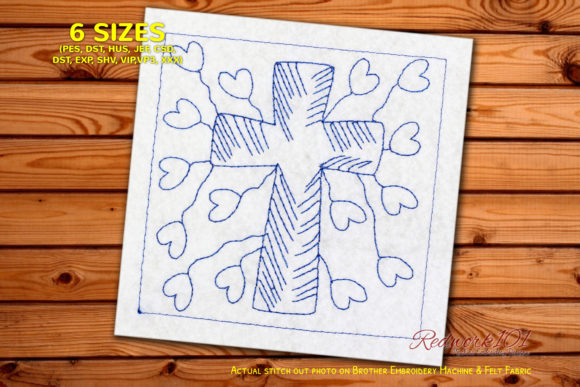
Easter Cross with Sheep Redwork Review
As an embroidery designer who has spent countless weekends behind a craft fair table, I look at every new machine embroidery design through a very specific lens. It is not just about whether the stitching is pretty; it is about whether the design will stop a shopper in their tracks, survive the wash, and sell enough units to cover my booth fee. When I first pulled up the Easter Cross with Sheep Redwork file on my screen, my immediate impression was one of understated elegance. This is not a loud, neon-bright graphic screaming for attention. Instead, it offers a quiet, rustic charm that fits perfectly into the modern farmhouse aesthetic that continues to dominate the handmade market.
The redwork style itself is a strategic choice for seasonal products. By relying on a single thread color against a neutral background, the design feels timeless rather than trendy. For an Etsy seller or a boutique maker, this means the product has a longer shelf life. You are not stuck with leftover inventory because the style went out of fashion. The combination of the cross and the sheep creates a narrative of peace and renewal, which resonates deeply with customers looking for meaningful handmade product options during the spring season.
Visual Appeal and First Impressions
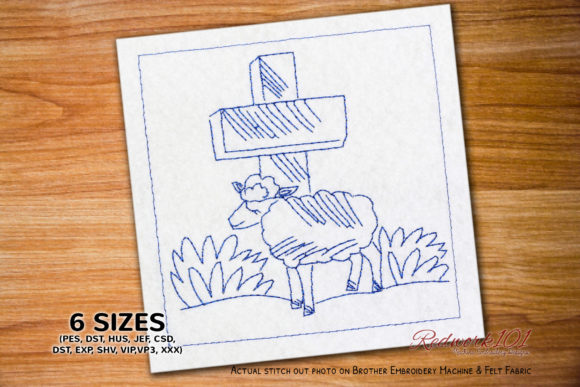
The strength of Easter Cross with Sheep Redwork lies in its simplicity. In a crowded craft fair environment, complex designs can sometimes look muddy from a distance. Redwork, however, relies on high contrast and clean lines. When stitched in a classic red or a soft pastel on white linen, the silhouette of the sheep and the structure of the cross are instantly recognizable. This clarity is crucial for a craft fair product. Shoppers walking past your booth have only seconds to decide if they want to stop. A clean, bold outline grabs attention without overwhelming the eye.
I appreciate that the description notes the outer box stitch is optional. This flexibility is vital for professional production. If you are aiming for a minimal look, skipping the box allows the motif to breathe. If you need a defined boundary for a patch or a pocket, the box provides structure. However, be mindful of the note regarding the outer box color. In many digital files, the bounding box is a different color code to help with hooping or trimming. Ensure you check your embroidery file settings so you do not accidentally stitch a bright green border around a serene religious motif. Always review the color stops in your software before sending the job to the machine.
Product Applications for Maximum Sales
Where does this design truly shine? Based on my experience, the Easter Cross with Sheep Redwork is versatile, but it performs best on items that offer a flat, stable canvas. Here is how I would deploy this design in a real-world sales scenario:
- Tea Towel Embroidery: This is arguably the strongest application. Flour sack towels are inexpensive to source, easy to hoop, and highly popular as hostess gifts. The redwork style looks intentional and artisanal on these textured fabrics.
- Tote Bag Design: A canvas tote with this motif centered on the front becomes a functional piece of art. It appeals to customers who want to carry their faith subtly in their daily lives.
- Apron Embroidery: Positioning the design on the bib of a kitchen apron creates a charming, nostalgic feel. It suggests warmth, home, and tradition.
- Embroidered Patch: If you stabilize correctly, this design can be cut out and sold as an iron-on or sew-on patch. This allows customers to customize their own jackets or bags, expanding your market reach.
For those considering caps or curved surfaces, proceed with caution. While the design is relatively simple, the horizontal lines of the cross may distort if the fabric is not stabilized properly. I recommend testing on a curved cap buckram before committing to a full batch. Similarly, for dark fabrics, you must ensure your thread choice provides enough contrast. A dark red on navy might get lost, whereas a bright crimson or even a metallic gold could pop beautifully, depending on the desired mood.
Production Practicality and Batch Efficiency
From a business standpoint, the Easter Cross with Sheep Redwork is a dream for batch production. Redwork designs typically have lower stitch density compared to filled satin-stitch designs. This means less thread usage, fewer thread breaks, and faster machine run times. For a small shop owner, time is money. Being able to hoop five tea towels and let the machine run with minimal supervision allows you to focus on packaging, marketing, and customer service.
However, "simple" does not mean "careless." You must still pay attention to the technical details. Because redwork relies entirely on line work, any puckering or misalignment is immediately visible. There are no dense fill stitches to hide imperfections. Therefore, using the right stabilizer is non-negotiable. For lightweight fabrics like voile or thin cotton, a cut-away stabilizer might provide the necessary support to keep the lines crisp. For heavier canvases, a tear-away may suffice, but always test on scrap fabric first.
Check the hoop size requirements carefully. While the design may fit in a 4x4 inch hoop, giving it more space in a 5x7 or 6x10 hoop can make hooping easier and reduce the risk of hitting the hoop edge with larger items like tote bags. Consistency in placement is key to brand professionalism. Use marking tools or laser guides to ensure every cross is centered perfectly on every apron.
Marketing and Online Presence
In the digital realm, this design photographs exceptionally well. The high contrast of redwork creates sharp, clean images that look great on social media and in Etsy listings. When creating your printable mockup or taking photos of the finished product, use natural light to highlight the texture of the thread against the fabric. Avoid harsh flashes that can flatten the dimensionality of the stitches.
When writing your product descriptions, emphasize the handmade quality. Mention that each item is stitched with care, using high-quality threads that resist fading. Use keywords like "farmhouse decor," "religious gift," "spring embroidery," and "artisan textile" to attract the right audience. Remember, you are not just selling a towel; you are selling a feeling of home and tradition.
Final Designer Notes
Before you launch this as a small shop product, take these final steps:
- Verify Licensing: Confirm that the digital embroidery file comes with commercial licensing rights. Never assume a free or low-cost download allows for resale of finished goods.
- Test Thread Colors: Do not limit yourself to traditional red. Try sage green, slate blue, or charcoal gray to see how the design adapts to different aesthetics.
- Inspect Stitch Quality: Zoom in on your test stitch-out. Look for jumps or loose threads. Trim meticulously. In redwork, every jump stitch is visible and must be managed.
- Consider Fabric Texture: The design will look different on smooth cotton versus rough linen. Decide which look aligns better with your brand identity.
The Easter Cross with Sheep Redwork is a solid addition to any spring collection. It balances spiritual significance with aesthetic appeal, offering a practical, profitable option for the serious embroidery entrepreneur. By focusing on quality production and strategic product placement, you can turn this simple design into a standout seller for your next market season.