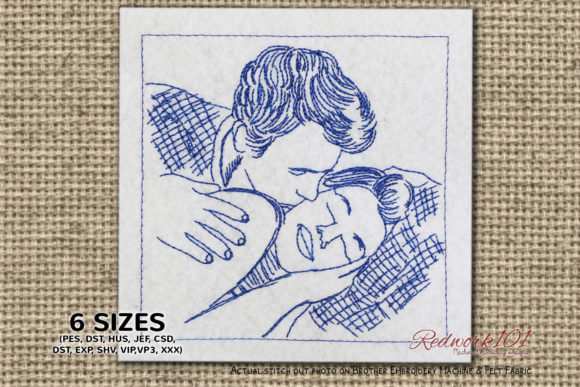
Reviewing Boy Kissing on Cheeks for Real Projects
As a designer who spends more time staring at stitch maps than actual fabric, I have learned that the difference between a good machine embroidery design and a great one often comes down to context. It is not just about how it looks on the screen; it is about how it behaves under the needle. Recently, I evaluated Boy Kissing on Cheeks, a charming piece of digital art intended for Valentine S Day and affectionate gifting. My goal was not to simply admire the aesthetics but to determine if this embroidery file holds up in a real-world production environment.
The first impression of Boy Kissing on Cheeks is undeniably warm. The layout suggests a narrative of innocence and affection, which immediately narrows its ideal application. This is not a design for corporate branding or edgy streetwear. It belongs in the realm of soft goods: baby items, children’s apparel, and sentimental gifts. The visual personality is gentle, relying on clear shapes rather than hyper-realistic shading. For an Etsy seller or a small shop product creator, this clarity is a significant advantage. Complex shading often turns into a muddy mess on textured fabrics, but a design with strong outlines and defined color blocks, like this one, tends to read clearly even from a distance.
Practical Application in Custom Apparel and Gifts
To truly test the viability of Boy Kissing on Cheeks, I imagined placing it on several common substrates. The most obvious candidate is a children’s sweatshirt. Sweatshirt embroidery requires designs that can handle the loft of fleece or French terry without sinking in. If this design utilizes adequate fill stitch density, it will sit nicely on top of the fabric. However, if the interior areas are too sparse, the fabric texture might show through, breaking the illusion of solid color. I would recommend using a cut-away stabilizer for any knit garment to prevent distortion during wear and washing.
Another excellent use case is a canvas tote bag. A tote bag design needs to be bold because the fabric weave is coarse. Here, the optional Box Stitch mentioned in the product notes becomes relevant. The description states, "The Box Stitch shown in the picture is optional. The color of the outer Box is a different color in most of the designs unless it is part of the design itself, you can skip the co." This flexibility is crucial. On a natural canvas tote, skipping the box might allow the design to breathe, integrating better with the rustic aesthetic. Conversely, adding a contrasting box could frame the image, making it pop against a busy background. As a craft business owner, having this option allows you to customize the look for different client preferences without needing two separate files.
Navigating Fabric Challenges and Stitch Density
While the theme is sweet, the technical execution requires careful attention to stitch density. Designs featuring faces or close-up interactions, such as a boy kissing cheeks, often have small, detailed areas. If these details are rendered with dense satin stitch columns that are too wide, they may snag or break over time. If they are too narrow, they might not cover the fabric adequately. I advise running a test stitch-out on scrap fabric that matches your final product. Pay close attention to the edges of the shapes. Are they crisp? Do they pull the fabric?
Textured fabrics present another hurdle. If you are applying this to a waffle-knit towel or a ribbed sweater, the fabric texture can distort fine lines. In such cases, a topping stabilizer is non-negotiable. It keeps the stitches floating above the texture, ensuring the finished product looks professional rather than homemade in the negative sense. For baby embroidery, comfort is paramount. Ensure that the back of the stitching is clean. Any loose threads or bulky knotting should be trimmed and secured, as sensitive skin will irritate easily. Using a soft, tear-away stabilizer for woven baby clothes can help maintain softness while providing necessary support during stitching.
Commercial Viability and Brand Consistency
For commercial embroidery professionals, consistency is key. When selling digital embroidery file assets or finished goods, your customers expect reliability. Boy Kissing on Cheeks fits well into a seasonal collection, particularly for holiday embroidery campaigns around Valentine’s Day or Mother’s Day. However, its appeal extends beyond specific holidays. It works for birthdays, family reunions, or just-because gifts. This versatility increases its value as a design asset in your library.
When creating printable mockup images for your online store, consider the color contrast. The product note mentions that the outer box color varies. Use this to your advantage in marketing photos. Show the design on both light and dark garments to demonstrate its adaptability. A personalized gift often involves adding names or dates. If you plan to add text to this design, ensure the font choice complements the playful, rounded nature of the illustration. A harsh, serif font might clash with the softness of the image, whereas a handwritten script or a rounded sans-serif would enhance the overall cohesion.
Technical Notes for the Embroiderer
Before committing to a large batch of custom apparel, take these practical steps:
- Check the hoop size: Confirm that the design fits comfortably within your standard hoops. Leaving margin for hooping is essential to avoid edge hits.
- Test thread colors: Screen colors rarely match thread charts exactly. Pull physical thread samples to ensure the skin tones and clothing colors in the design harmonize with your fabric choice.
- Inspect small details: Zoom in on the digitizing. Look for unnecessary jump stitches or overly complex paths that could increase production time without adding visual value.
- Verify licensing: Always confirm whether the embroidery project license allows for unlimited commercial sales or if there are restrictions. This is critical for Etsy sellers and boutique owners to avoid legal issues.
- Consider the backing: For items that will be washed frequently, like aprons or kitchen towels, ensure the stabilizer chosen is durable enough to withstand repeated laundering without disintegrating or leaving residue.
In conclusion, Boy Kissing on Cheeks is a solid contender for designers focusing on sentimental and juvenile markets. Its strength lies in its emotional resonance and adaptable layout. By paying attention to stabilizer choices, fabric textures, and stitch density, you can transform this digital file into a high-quality handmade product that customers will cherish. Whether it ends up on a caps, a pillow cover, or a patch, the key is respecting the materials you work with. Good design is only half the battle; skilled execution is what builds trust and drives repeat business in the creative entrepreneurs space.